Today, we showcase
Elena Dragulea and
Stefania Mastroeni, IKEA co-workers in Italy who supported social enterprise
InVento Innovation Lab. Founded by Giulia Detomati, InVento Lab was one of eleven enterprises in the fifth cohort of the
Dela programme, a systems change accelerator co-created by Ashoka and IKEA Social Entrepreneurship. Together, they helped turn a bold idea into a practical tool for change, both inside IKEA and in other companies.
Turning ideas into action
Elena joined the Dela programme in September 2024 as an Experimentation Partner. With a background rooted in structure and planning, she was stepping into a world where things are often less defined.
“I’m used to planning in advance and having a clear view of the path ahead,” she explains. “Through Dela, I saw how social entrepreneurs act even when outcomes are not fully known.”
That social entrepreneur mindset of progress over perfection left a mark on her.
Alongside Stefania, she supported InVento Lab in refining its core idea and shaping it into something tangible:
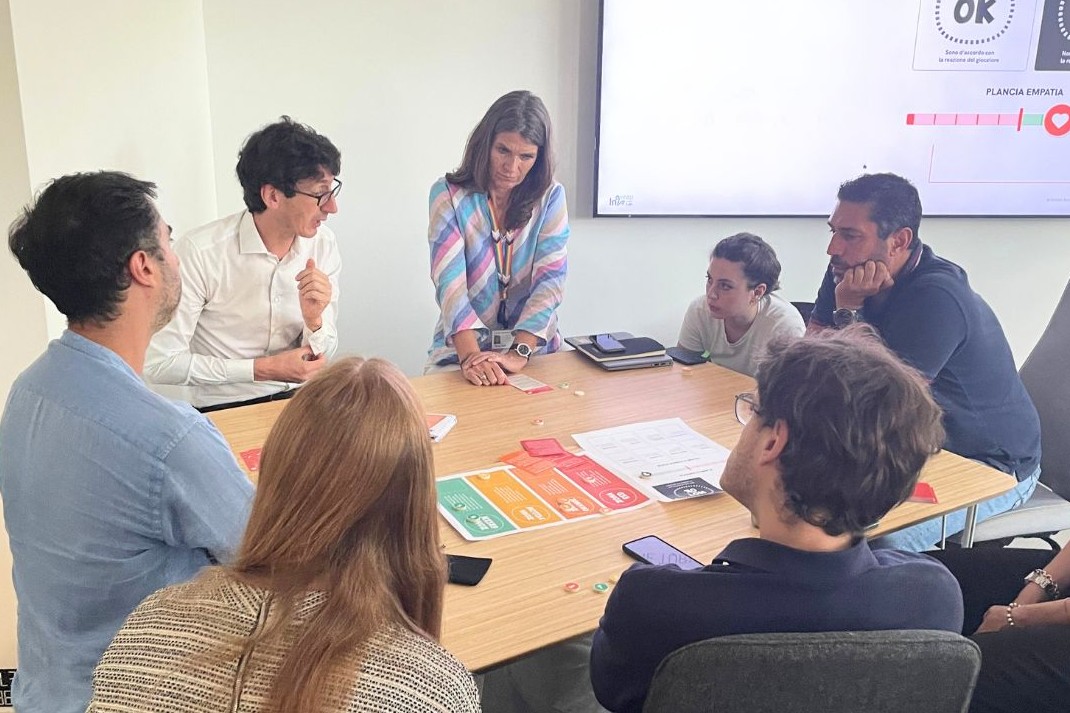
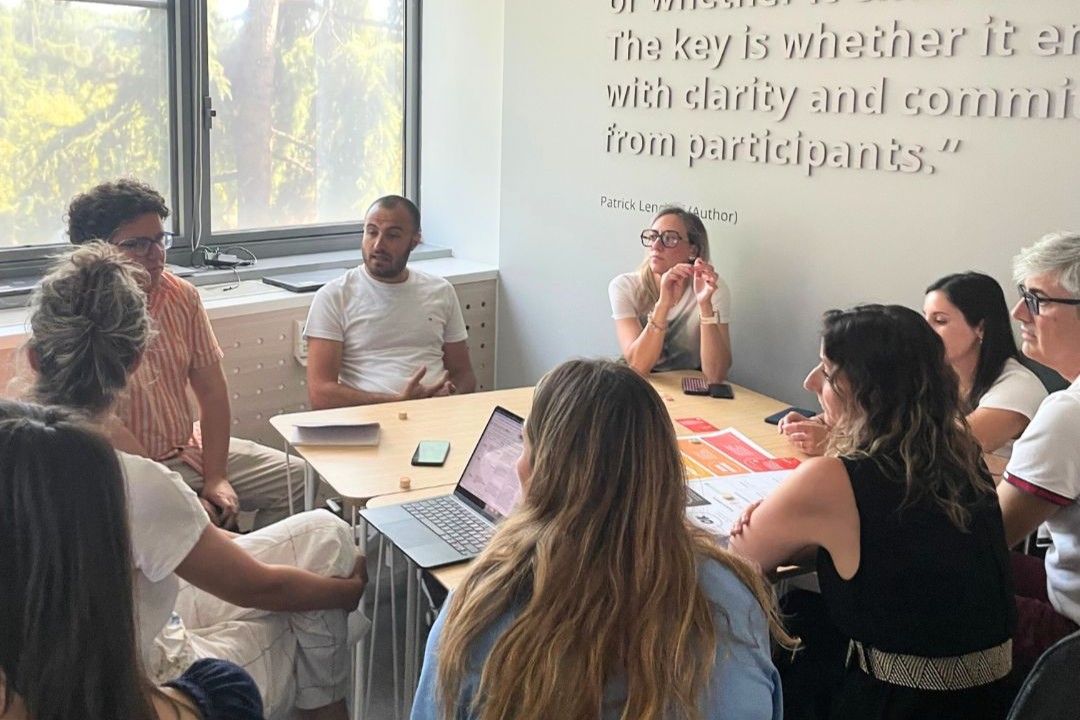
Breaking the Cycle a board game designed to address gender-based violence. What started as a concept gradually became more structured, more coherent, and ready for testing in the real world.
A game that opens conversations
For Stefania, ED&I Leader at IKEA Italy and a Thought Partner in the programme, the topic was deeply personal. Through her previous work in sustainability, she had already collaborated with local associations focused on preventing gender-based violence.
“It’s a topic very close to my heart,” she says.
When the idea emerged to pilot the game within IKEA, both Elena and Stefania immediately saw the potential. “The game was created to help companies to be allies to tackle gender-based violence, which can sometimes be subtle and difficult to identify,” Stefania explains. “Companies are microcosms of society. We have a responsibility.”
Elena agrees. “Inclusivity and equality are core values at IKEA. It felt like a meaningful place to continue conversations about gender-based violence.” They aligned with HR, who shared their enthusiasm. The pilot involved co-workers from different departments, many of whom were already familiar with the topic through past campaigns and collaborations with anti-violence centres.
Some might question whether a game is the right format for such a serious subject. Stefania sees it differently.
“It’s precisely through the playful experience that children (and adults too) establish key concepts and learn social dynamics,” she says. “A game can lower barriers.”
The reactions from co-workers were thoughtful and engaged. While it didn’t spark a revolution overnight, it did something equally important: it created a safe space to talk about situations that are often complex and uncomfortable.
“It helped people realise that situations related to gender-based violence are often not black and white,” Elena reflects. “Observation, listening and context matter.” The game also reminded co-workers of practical support systems, such as emergency contacts and help numbers, bringing awareness from theory into everyday life. For Stefania, the biggest confirmation was that even in a workplace already active on the topic, the game still generated new reflections. “You should never look away from gender-based violence,” she says.