
Introducing the first cohort of Everyone's Business programme!
Meet the 11 social enterprises contributing to a more inclusive, sustainable, and hopeful Sweden.

Meet the 11 social enterprises contributing to a more inclusive, sustainable, and hopeful Sweden.
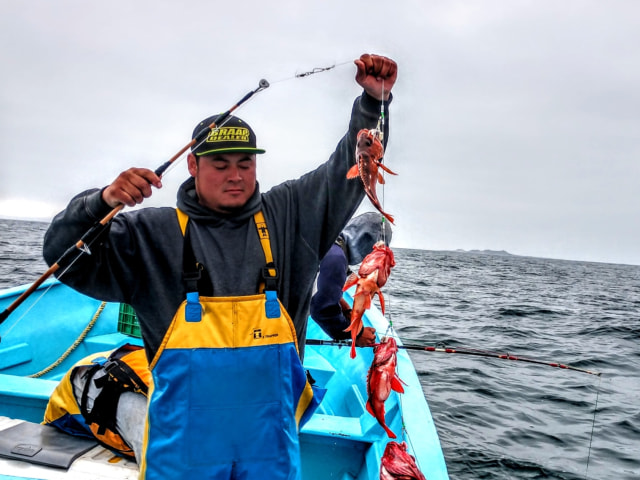
Every year on 16 October, World Food Day highlights important topics such as food waste, sustainable agriculture, biodiversity, and the challenges faced by fishing communities — all in an effort to combat climate change. This year's theme is "Hand in Hand for Better Foods and a Better Future”. It's the perfect opportunity for us to shine a spotlight on the incredible efforts of social entrepreneurs, who are making everyday life better for so many people and how they're creating a more sustainable and inclusive world.

Social entrepreneurship in Mexico is moving into a new stage. What began as a growing movement of mission-driven businesses is increasingly becoming a source of scalable solutions to social and environmental challenges
The transition from cohort 5 to cohort 6 of the Mexico Accelerator Programme (MAP) offers a glimpse into that evolution. This week we celebrate the enterprises that have strengthened their businesses and their ability to create positive change, while welcoming a new generation of entrepreneurs helping shape a more inclusive and sustainable future.
MAP is a partnership between IKEA Social Entrepreneurship and New Ventures, supported by IKEA Mexico. In the past six years, the programme has supported over 60 social enterprises focused on equality, inclusion, and sustainability. These businesses are creating jobs, improving access to essential products and services, strengthening local economies, and helping people live more sustainably.
As cohort 5 comes to an end, we want to recognise the committment, resilience, and creativity of the social entrepreneurs who’re building a more inclusive future. Throughout the programme, the ten participating enterprises have strengthened both their commercial foundations and their capacity to create lasting social and environmental value.
For Cerrando el Ciclo, the programme was an opportunity to prepare for the next phase of growth. They built a stronger sales system, improved their business model, and learned how to work with bigger corporate partners, including securing a partnership with IKEA Mexico. Now, they’re better prepared to scale their circular solutions to more people and organisations.
ChopValue used the programme to make its circular business model even stronger. The team worked on improving their strategy, building new partnerships, and getting ready to attract investment for future growth.
For Sal de Aquí, the journey was about growing without losing sight of what matters most. With support from the programme, they strengthened their commercial strategy, improved operational efficiency, and found new ways to communicate their story. They also developed stronger approaches to measuring and sharing their impact.
“We have a lot of history to tell, but the little communication we had was just 'buy from us, buy from us, buy from us.' Now we tell the story behind the salt workers."
- Marisol Pulido - Founder & CEO at Sal de Aquí
Throughout the programme, tailored support and mentorship from IKEA co-workers in areas like design, supply chain, and business development helped these businesses build a strong foundation for long-term success. The learning went both ways. Entrepreneurs gained useful knowledge and new perspectives, while IKEA co-workers learned from innovative businesses finding new ways to solve tough problems.
Looking across both cohorts, we can see an encouraging pattern. It’s becoming less needed for social enterprises to prove that impact and business can coexist because they’re already demonstrating how social and environmental value can drive business growth. The challenge is now shifting from proving the impact to scaling their impact.
As we close one chapter, we’re excited to open another by welcoming cohort 6.
This new group of social enterprises shows how Mexico's impact ecosystem continues to grow and evolve. While the enterprises work in different sectors, they share the belief that businesses can create social and environmental value while also being financially sustainable.
Their work covers some of the most important areas for Mexico's future, such as inclusive employment, circular economy solutions, regenerative agriculture, and rural livelihoods.
Cambiando Modelos and La Cana are creating meaningful employment opportunities for people with disabilities and women who were formerly incarcerated. This helps more people join the workforce and opens up new economic opportunities.
Ecolana and Grupo Promesa are making material recovery systems stronger and encouraging people to change their habits through technology and environmental education. This helps reduce waste and keeps valuable resources in use.
GEXUS, Jangala, and Vero Amore are helping restore soil health, supporting producers to develop new skills, and connecting them to markets. Their work contributes to stronger rural economies while promoting more sustainable agricultural practices.
Rutopia, Semillero de Empresas Rurales, and Tuux Mexikoo are creating new opportunities for rural and artisan communities through regenerative tourism, fair trade, and better access to markets. This helps local communities build stronger and more stable livelihoods.
Together, this cohort shows how much the conversation about impact has changed. Now, the question is not whether businesses can create positive social and environmental results, but how proven models can reach more people and make a bigger difference.
As we celebrate MAP cohort 5 and welcome cohort 6, we look to the future with optimism. These entrepreneurs show that when impact is at the heart of a business, it can create opportunities, strengthen communities, and help build a more sustainable future.